operator focused outdoor fiber optic cable connector standard matched

Optical fiber line has revolutionized the exchange of information in the modern era.
Understanding interior fiber deployments
Fiber optic cable has become an integral part of modern communication networks.Indoor cable routing creates distinct obstacles and opportunities.Robust fiber installs need complete insight into modules and termination/routing procedures.A vital element is determining the proper cable class according to bandwidth and purpose.Additionally, competent technicians need to observe strict safety protocols to protect installations
- Meticulous project planning and precise execution ensure smooth indoor fiber installs
- Variables like structural layout, present cabling, and forthcoming bandwidth needs need attention.
- Proper termination techniques are critical to ensure signal integrity and reliable connectivity.
Overcoming connectivity gaps adss cable
Exterior fiber links play an essential role in shrinking the connectivity divide.Expanding high-speed fiber throughout remote zones grants consistent connectivity and resources to everyone.This infrastructure is essential for fostering economic growth, improving education, and empowering communities in the digital age
Fiber Cable Types: Single-Mode vs. Multi-Mode Explained
When moving data across great distances, fiber optics are the top choice.They outperform copper alternatives by enabling extremely high-speed transmission with very low attenuation.Nonetheless, fiber cable models are not identical.Two main fiber formats prevail commercially: single-mode and multi-mode.
Single-mode fiber, as its name suggests, guides a single mode of light within its core.Consequently, it minimizes dispersion, ideal for extended-range transmissions with little attenuation.Multi-mode fiber propagates multiple optical modes together, yielding higher capacity for short-range networks.Such multi-mode cabling is popular in local network environments confined to buildings or campuses.
- Consequently, selecting single-mode versus multi-mode hinges on particular application needs.For extended-range, high-capacity links, single-mode fiber is the best fit.Conversely, multi-mode offers a cost-efficient option for high-throughput short-distance setups.

Advantages of Using Fiber Optic Cables
Optical fiber has transformed data transport thanks to many advantages.A significant benefit is their exceptional bandwidth availability.Unlike copper cables, optical fiber moves large quantities of data over long ranges with minimal attenuation.High-rate transmission makes fiber optimal for heavy-data uses including streaming, gaming, and cloud computing.Moreover, optical fiber is sturdy, resisting corrosion, damage, and electromagnetic interference.This immunity secures signal fidelity and reliable data flow under harsh conditions.Moreover, fiber provides elevated security for transmitted data.Information over fiber is more secure and harder to intercept or tamper with.This inherent security feature makes them a preferred choice for sensitive applications such as financial transactions and government communications.
Enterprise Fiber Solutions for High Performance
Enterprises demand durable and dependable network infrastructure to support key applications.Fiber optic deployments are chosen by enterprises for high capacity, low latency, and interference immunity.Enterprise-grade fiber provides scalable and secure channels for data transmission, voice calls, and video.Modern fiber platforms use multimode, single-mode, and duplex configurations to ensure requisite enterprise speeds.Installing fiber networks empowers businesses to increase performance, trim costs, and improve competitive standing.
- Enterprise Fiber Advantages:
- Exceptionally High Bandwidth Capacity
- Low Latency Supporting Real-Time Services
- EMI-Resistant Transmission
- Adaptable Scalability for Growth
- Advanced Network Safeguards
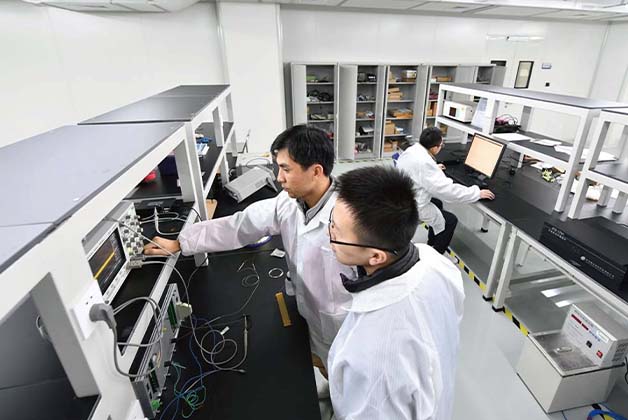
Safeguard Your Fiber Investment: Installation Tips
A carefully planned fiber deployment is vital to guarantee infrastructure dependability.To maximize returns, adopt these fiber deployment best practices:Hire a qualified fiber-optic contractor to design a system aligned with your needs.Select premium shielded cables and elements to prevent signal loss and external interference.Validate correct cable termination approaches to ensure superior data transit.Carry out periodic inspections and diagnostics to spot faults early.
Indoor vs Outdoor Fiber: Major Distinctions
Choosing appropriate fiber is driven by intended usage.Indoor/Within-building/Internal fiber optic cables are designed for installations within buildings, offering high bandwidth and minimal signal loss.These cables often utilize lighter weight materials as well as feature more flexible designs for easier installation in confined spaces.Conversely, outdoor fiber variants withstand rugged environmental factors and weather.They employ robust materials like UV-resistant jackets and specialized connectors to ensure reliable performance in rain, sun, and extreme temperatures.
Here is a concise look at the primary variations:
- Material choice: Indoor variants favor lighter, less tough materials suitable for controlled environments, whereas outdoor types emphasize rugged, weatherproof constructions
- For indoor installs, procedures are commonly simpler and less specialized, whereas outdoor installs require ruggedized techniques and site preparation for exposure to elements
- Connector selection contrast: indoor connectors favor ease of use and density, outdoor connectors prioritize environmental sealing and toughness
Cable Standards and Regulatory Guidelines
Fiber cabling relies on documented standards and regulatory compliance to ensure system interoperability and performance.These standards are developed by global organizations, such as the International Organization for Standardization (ISO) and the Institute of Electrical and Electronics Engineers (IEEE).Primary standards cover cable construction, transmission behavior, connector interfaces, and test methodologies.Such regulatory frameworks also promote secure, reliable, and compatible deployment of fiber systems.
- Broad industry uptake ensures efficient design, manufacturing, and deployment of fiber optic networks.
- Observing standards decreases errors and preserves ideal transmission performance.
Evolving Fiber Optic Technology Trends
Fiber optic systems are moving toward transformation as bandwidth, latency, and security needs climb.An important advancement is DWDM expansion, permitting huge numbers of signals on a single fiber to substantially raise network capacity.Also trending is the incorporation of novel materials and sophisticated production techniques.Research continues into novel glass fibers, plastic optics, and photonic crystals to increase bandwidth, efficiency, and mechanical strength.
Also, developers and researchers explore inventive fiber optic applications outside standard telecom/data roles.Use cases span fiber sensing and detection across healthcare, manufacturing, and agricultural industries.
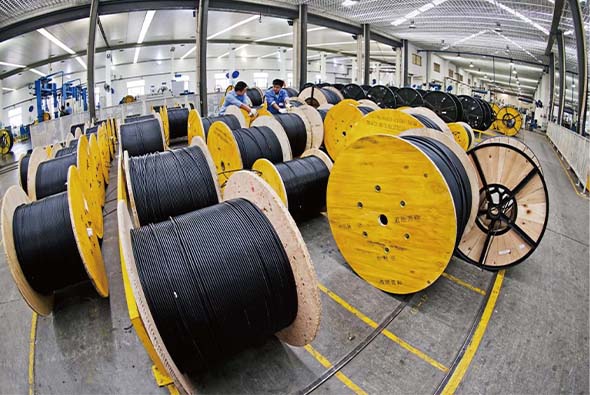
Fiber optic technology is poised to play an even more central role in shaping the future of communications and beyond.With continued evolution, foresee faster, more efficient networks with larger capacity, smarter connected devices, and groundbreaking advances across domains.
Troubleshooting Fiber Optic Cable Issues
Fiber optic cables are renowned for their exceptional bandwidth and reliability, but like any technology, they can encounter problems.Adopting a stepwise diagnostic process is essential to identify causes of fiber faults.Below are common indicators and suggested fixes to help you resolve fiber problems efficiently.
Initiate troubleshooting by checking the physical integrity and condition of cables.Look for any visible damage, tears, breaks, loose connections, or bending that could impair signal transmission.
Use an optical power meter to evaluate signal levels at different positions along the fiber path.Variations from expected values may point to fiber attenuation or damage needing repair or replacement.Assess connectors for dirt, dust, or residue that may obstruct signal transmission.Apply certified fiber cleaning methods and kits to restore connector cleanliness and secure links.